How to Spot Hail Damage on Your Shingles (Before Your Adjuster Does)
A visual guide to hail damage indicators on asphalt shingles — bruising, granule loss, mat fractures — with photos from real Treasure Valley storm-damage inspections.
We constantly see property owners overlook serious roof issues because everything looks fine from the driveway. This common mistake leads to thousands of unfiled claims across the US every storm season. Those bruised asphalt layers will quietly deteriorate over the next few months while you assume nothing is wrong.
Leaks usually start just as the standard 12-to-24-month insurance claim window slams shut. Learning how to spot hail damage on your shingles before your adjuster does is the best way to protect your property investment and get a fair storm damage restoration claim paid.
Our team wants to help you catch these issues early. Let’s look at the exact signs professionals use to evaluate impacts, along with a few practical ways you can secure an accurate inspection.
What Hail Does to Asphalt Shingles
A hailstone measuring 1 inch or larger strikes a structure at roughly 50 miles per hour, according to the National Weather Service. That kind of kinetic energy does three specific things to the surface.
- Granule displacement: The protective ceramic-coated granules get knocked off at the impact point.
- Mat bruising: The underlying fiberglass and asphalt mat takes a dent, weakening the structure even without a visible fracture.
- Binder failure: The asphalt binder surrounding the impact zone loses its integrity, which accelerates future weather degradation.
Granule loss is the visible symptom. Mat bruising is the hidden structural damage you feel rather than see. Both qualify as legitimate grounds for a claim under standard homeowner policies from major carriers like State Farm or Allstate.
How to Spot Hail Damage on Your Shingles (Before Your Adjuster Does)
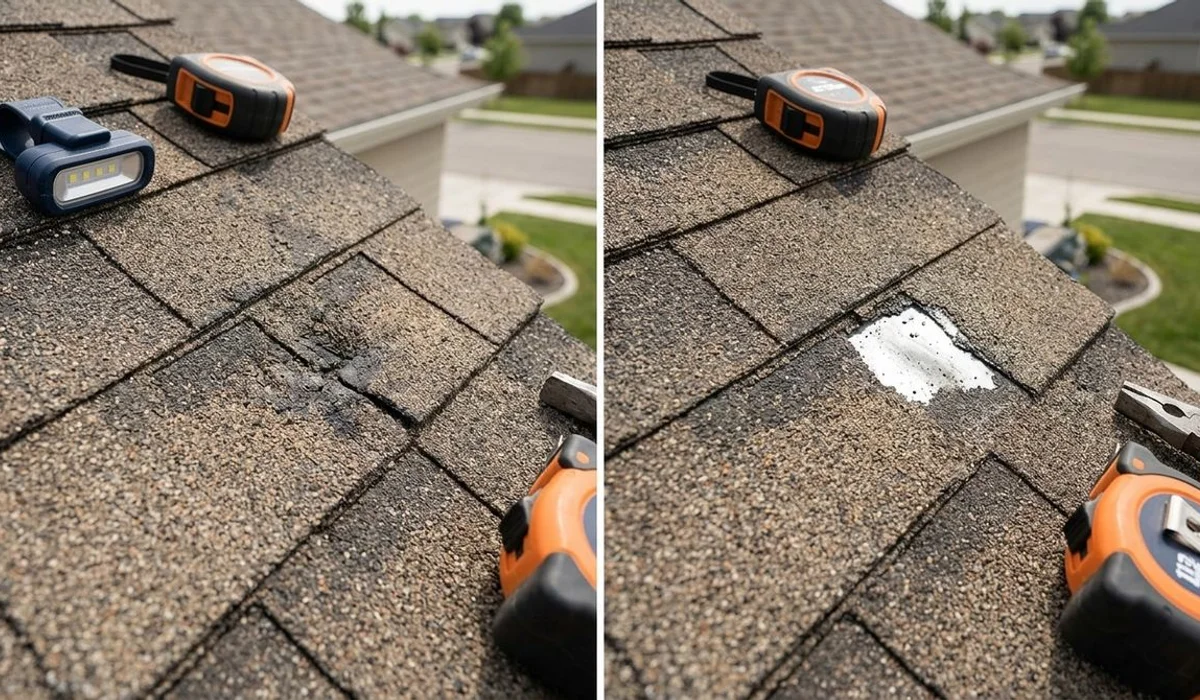
1. Round Dark Spots Where Granules Are Missing
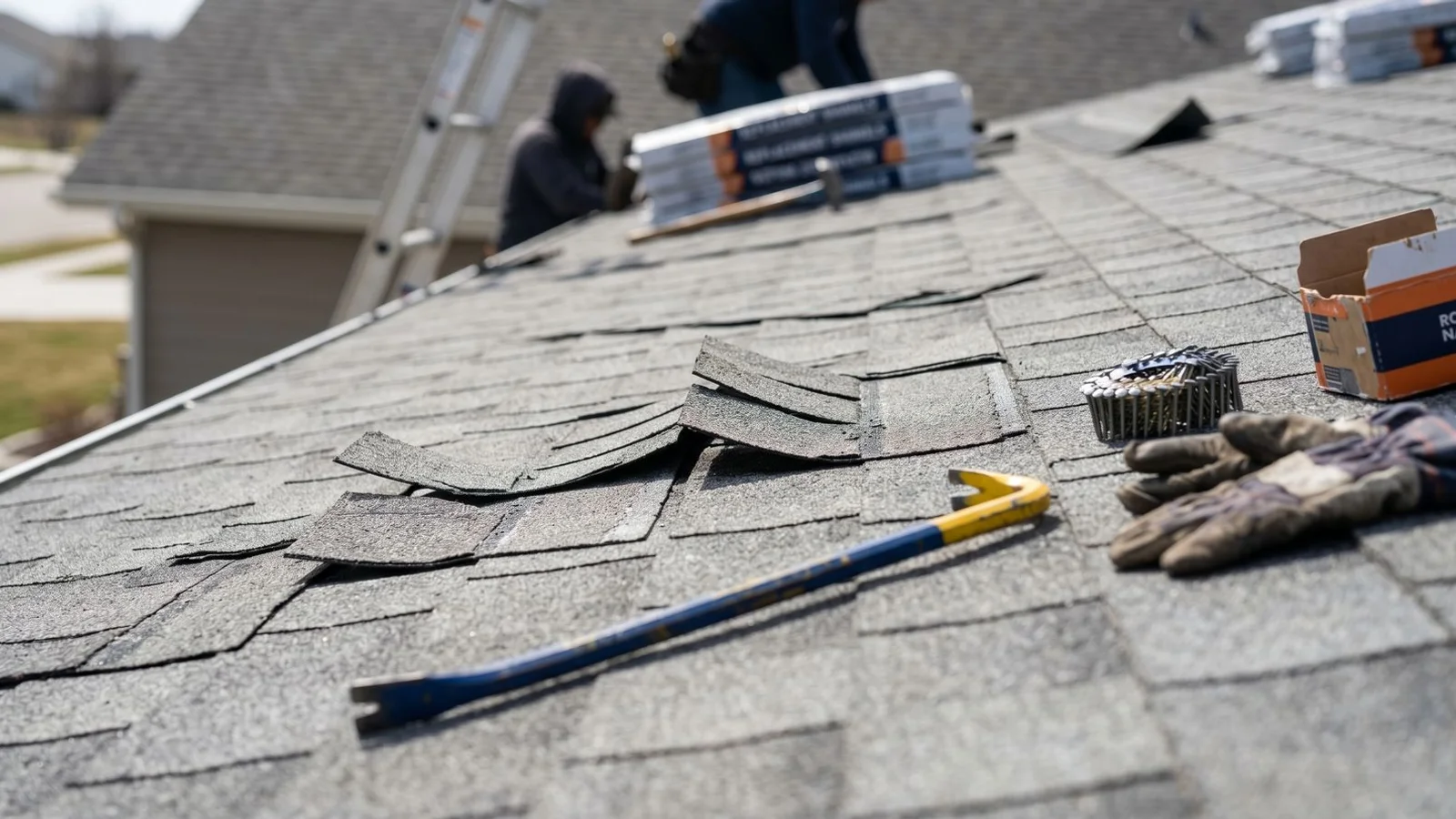
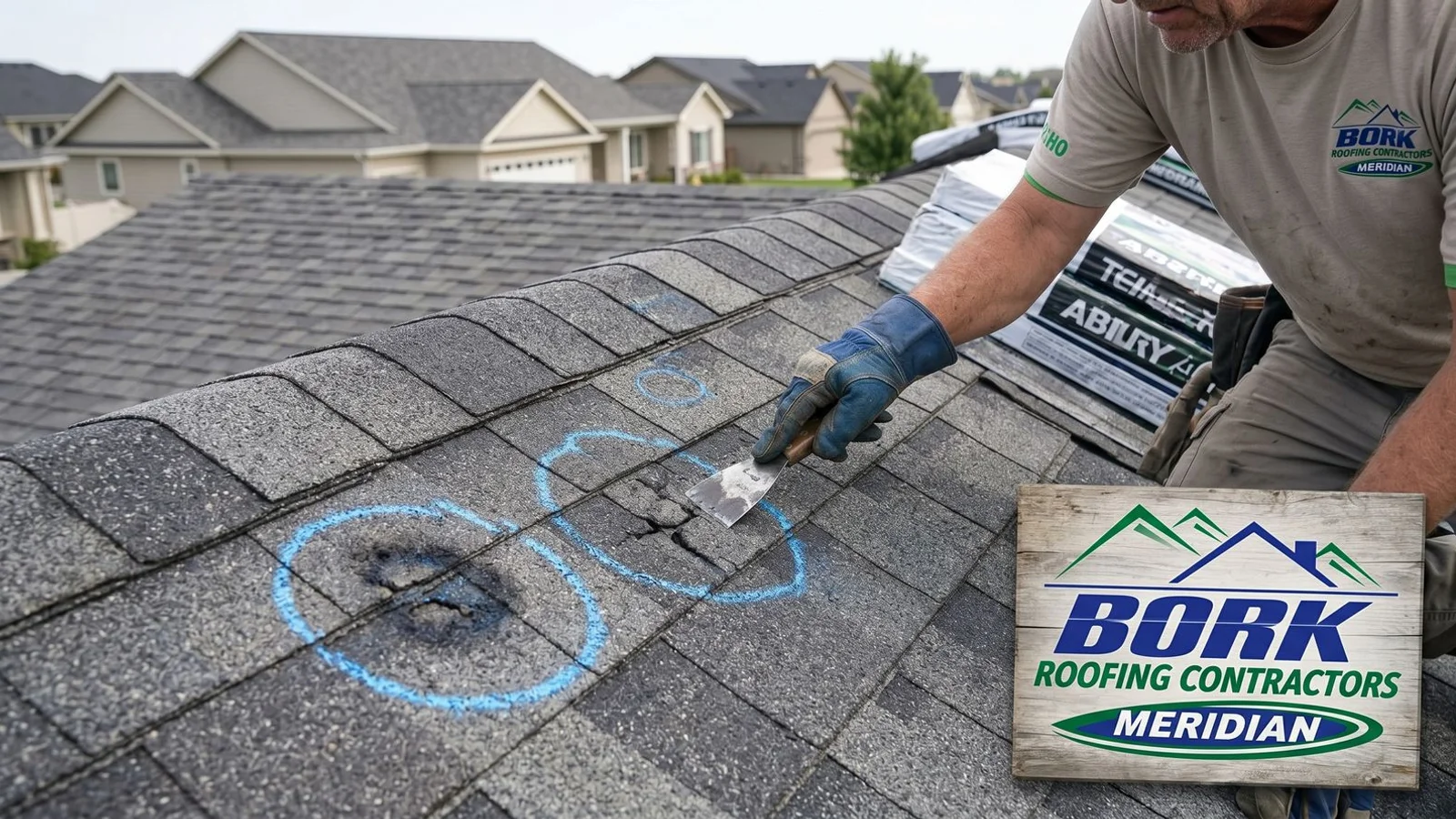
Start by looking for circular spots on the surface where the darker asphalt mat shows through. These impact marks usually range from the size of a dime to a quarter. A pattern of these across a specific slope is a strong indicator of a severe weather event. South and west-facing slopes typically take the heaviest hits during typical US storm systems.
2. Bruised Mat (Soft to Touch)
Press gently on one of those dark impact spots. If the surface feels soft or spongy compared to the surrounding area, the fiberglass mat is bruised. Insurance adjusters often compare this sensation to pressing on a bruised apple. This specific softening is the hallmark sign they look for during an official evaluation.
3. Exposed Fiberglass
Severe impacts can fracture the mat entirely and expose the underlying fiberglass mesh. This creates a critical vulnerability. The exposed fiberglass will rapidly degrade under direct UV sunlight within just a few months. This is unambiguous destruction that rarely gets missed during a professional inspection.
4. Bright Metal on Vents and Flashing
Check your metal roof vents, chimney caps, gutter covers, and flashing. Soft metals like aluminum will show clear, bright dents or splatter marks after a storm. Our inspectors actually check these accessories first because they act as the ultimate impact gauge. If you spot bright dings on these metal components, your main surface almost certainly took hits as well.
5. Collateral Damage on the Property
Storms rarely isolate their destruction to just the peak of your house. Checking the rest of the property provides crucial corroborating evidence for your insurance provider.
- Window screens for tears or stretched indentations
- Gutter faces and tops for scattered dents
- Aluminum downspouts for localized dings
- Painted exterior wood or siding for fresh chips
- Air conditioner condenser fins for flattened sections
- Wooden deck boards for round impact marks
This collateral evidence proves to the carrier that ice of a damaging size actually fell on your specific address.
6. Granules Accumulating in Gutters
A small amount of granule shedding is completely normal aging for major brands like Owens Corning or GAF. A sudden, heavy surge of granules in your downspouts after a weather event tells a different story. Finding a cupful or more of fresh, shingle-colored gravel in your gutters points to recent, severe impact scraping.
What You CAN’T Safely Check Yourself
We strongly advise against climbing up there to perform a personal inspection. The Centers for Disease Control and Prevention reports that ladder and roof falls result in over 150,000 emergency room visits in the US every year. Wet surfaces are incredibly slippery, and compromised structures are much weaker than normal. Stay safely on the ground and use binoculars or a smartphone zoom lens to scan the area.
When to Call
Time is rarely on your side after a major weather event. Most US homeowner policies enforce a strict 365-day window to file a structural claim.
Contact a professional if you experience a storm where:
- Ice chunks measured 3/4 inch or larger (quarter-sized or bigger)
- The system was smaller but lasted for an extended duration
- You spot any of the six indicators mentioned above
- Neighbors are actively filing claims for the same event
Our team uses high-resolution drones for safe, close-up imaging without causing further stress to the materials. You will receive a fully documented, written report to keep on file, whether you file a claim or not. Knowing how to spot hail damage on your shingles (before your adjuster does) empowers you to act quickly. Reach out at (208) 361-3115 to schedule your free post-storm inspection.