The 7 Most Common Roof Leaks on Meridian Homes (and How We Fix Them)
Flashing, penetrations, valleys, and ice dams — the seven roof leaks we see most often on Treasure Valley homes, and how Bork Meridian repairs each.
We have completed over 4,000 roof inspections across the Treasure Valley, and my team sees the exact same patterns repeat themselves season after season.
You know how certain neighborhood developments seem to age all at once?
That is exactly what happens with residential roofing systems.
Our data shows almost every issue perfectly aligns with The 7 Most Common Roof Leaks on Meridian Homes (and How We Fix Them).
The good news is that six of these seven issues are usually fast, affordable roof repairs if caught early.
Here is the breakdown of the most frequent failures seen locally and the exact steps required to solve them.
Understanding The 7 Most Common Roof Leaks on Meridian Homes (and How We Fix Them)
We put together this guide to help you identify warning signs before disaster strikes.
Finding the root cause early saves time and frustration.
Let us explore the list, ordered by frequency, to see exactly what to look for.
1. Dried or Cracked Pipe Boots
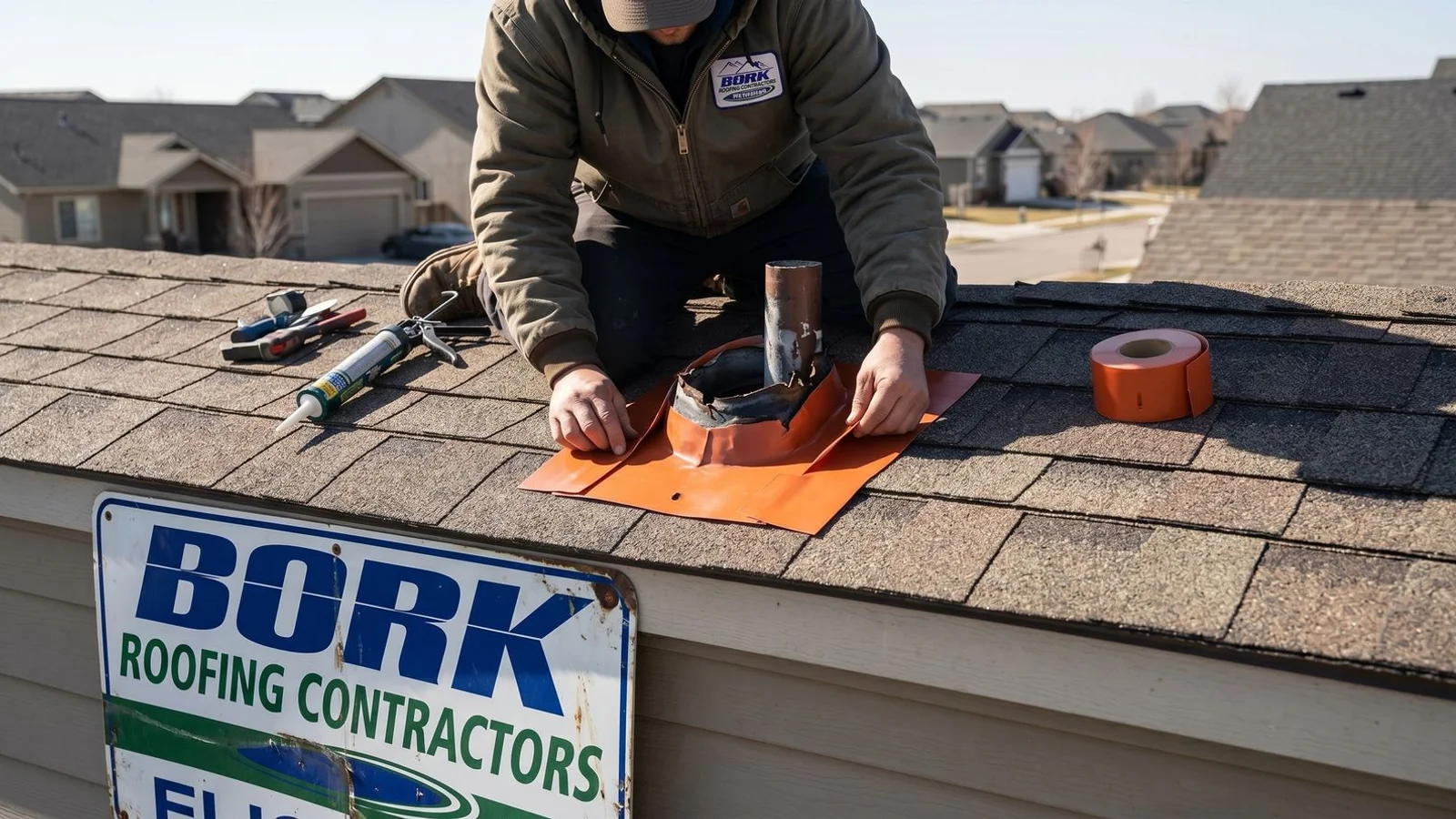
We find dried or cracked pipe boots at the top of the repair list almost every single week. This failure happens when the rubber or neoprene collar around your plumbing vents dries out, cracks, and lets water follow the vertical pipe directly down into the attic. The intense Idaho UV index cooks standard rubber components over time.
- Visible cracking or splitting on the rubber seal
- Rust stains running down the metal vent pipe
- Water pooling directly below the attic vent
Our repair crews notice that while most boots need replacement at the 10 to 12-year mark, original builder-grade materials frequently fail in just 7 to 8 years. Upgrading to a specialized product like a Perma-Boot or an Oatey UV-resistant collar prevents this rapid degradation. These premium options feature a gasket-less, high-impact plastic design that easily outlasts traditional rubber rings.
Our standard fix involves installing a slide-over replacement boot or a metal-flashed base featuring a lifetime silicone collar. This fast repair usually costs between $200 and $400 for most residential properties. Regular inspections help catch these worn rubber seals before major interior staining occurs.
2. Failed Chimney Step Flashing
Our technicians rank chimney flashing as the most commonly botched flashing detail on residential roofs. This zigzag metal material tucks under each shingle course along the sides of a chimney to channel water safely away. When installed incorrectly, or when someone just slaps tar over a leak, water quickly gets behind the metal and into the chimney chase.
We frequently see previous repairs using roofing cement acting as temporary fixes that are guaranteed to fail.
The International Residential Code (IRC) requires specific kick-out flashing to divert water away from vertical sidewalls, utilizing a 110-degree angle that extends at least four inches out.
A missing kick-out flashing diverter is a massive liability for moisture penetration.
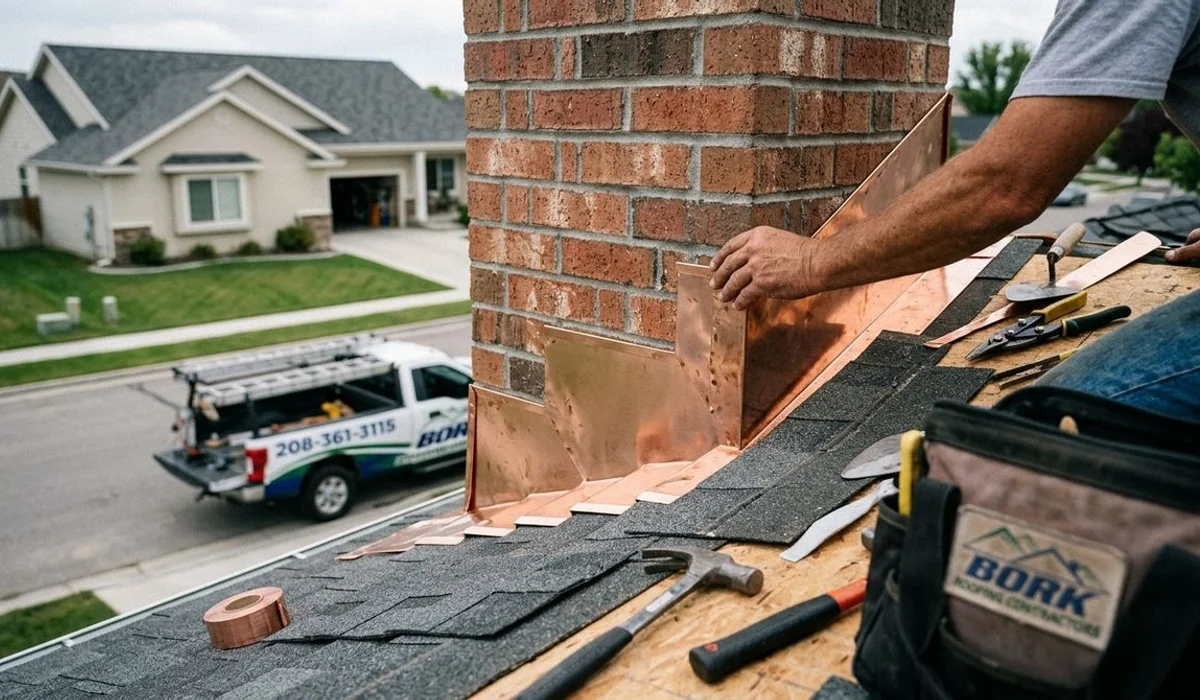
Our standard restoration involves removing the old materials, counter-flashing where needed, and installing thick, corrosion-resistant galvanized steel step flashing. Adding a proper new kick-out at the eave ensures the water actually reaches the gutters. Depending on the complexity of your chimney, this full service runs between $400 and $900.
3. Valley Failures
We consider the valley where two roof slopes meet to be the highest water-volume area on your entire property. These joints carry three to five times the water of the surrounding shingles. Small weaknesses become major interior leaks very quickly.
Our inspections often reveal failures caused by worn-through underlayment, missing valley metal, or wide gaps in a closed-valley shingle installation. Homeowners usually face a choice between open metal valleys and closed-cut shingle valleys during a repair. Both options have distinct advantages for water management.
| Feature | Open Metal Valley | Closed-Cut Shingle Valley |
|---|---|---|
| Material | Exposed galvanized steel or aluminum | Woven or overlapping asphalt shingles |
| Water Flow | Clears water and debris very quickly | Slower drainage, prone to debris buildup |
| Durability | Lasts 50+ years, highly durable | Needs replacement every 20-25 years |
Our crews strip away the failed section and apply a premium self-adhered membrane like Grace Ice & Water Shield directly to the wood decking. This rubberized asphalt layer seals tightly around roofing nails to prevent water from wicking inside. The repair process costs between $600 and $1,500, depending on whether the setup uses proper valley metal or reshingles with a California cut.
4. Wind-Lifted and Creased Shingles
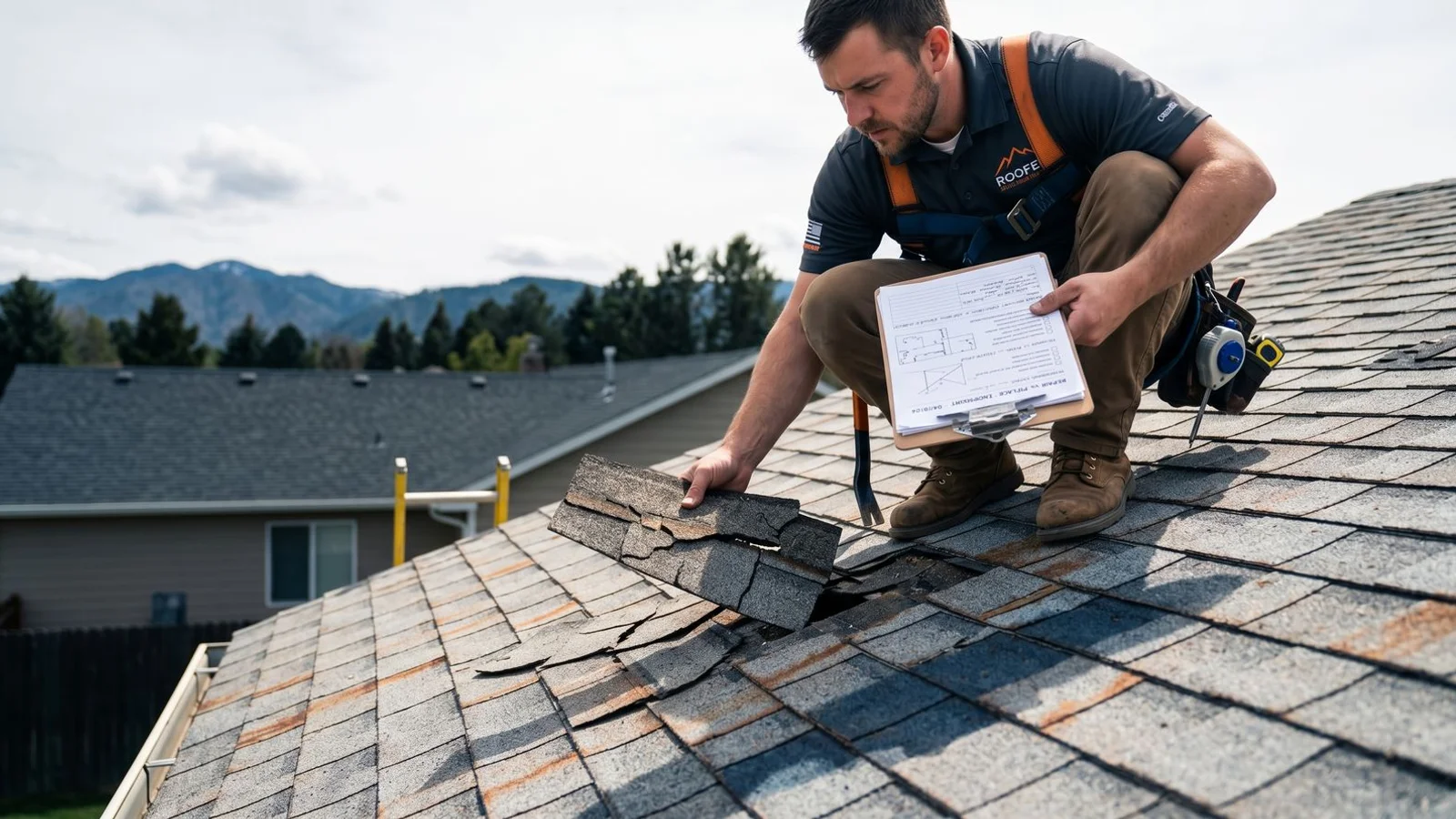
Our emergency line rings constantly during the heavy Treasure Valley spring windstorms. Local gusts frequently exceed 50 to 60 miles per hour, easily lifting standard three-tab shingles and creasing the fiberglass mat underneath. Even if the shingle falls back flat onto the roof, that crease acts as a permanent weakness where rainwater will slowly wick into the decking.
Identifying Wind Damage Early
We keep a massive stock of color-matched replacements at our Stonehenge Way warehouse to ensure fast repairs for clients. Matching the exact shade of your GAF, Owens Corning, or CertainTeed materials keeps your property looking uniform. Identifying compromised materials early prevents massive water damage down the line.
- Visible horizontal creases across the top half of the shingle
- Missing tabs or entirely exposed underlayment sections
- Loose flashing around chimney corners and ridge caps
Our repair teams can replace a handful of creased shingles for around $350 to $800. Modern architectural options boast wind resistance ratings of up to 130 mph, offering significantly more security. Upgrading to these heavier shingles provides total peace of mind during intense weather events.
5. Ice Dam Water Intrusion
We spend a significant portion of every winter repairing damage caused by heavy snow melting off warm roof surfaces. The water runs down to the cold eave, refreezes, and creates a thick dam of solid ice. This barrier forces subsequent meltwater to back up under the lower shingles and drip straight into your ceilings.
Solving the Root Cause of Ice Dams
Our experience shows that ice dams are rarely a roofing material defect, but rather a direct symptom of poor attic ventilation and low insulation levels. The US Department of Energy recommends homes in Idaho maintain an attic insulation rating between R-49 and R-60 for maximum efficiency. Hitting this target helps keep the exterior decking a consistent, cold temperature during the winter months.
Our short-term fix involves repairing the water-damaged shingles and extending the ice-and-water shield further up the eave. Long-term prevention requires balancing your intake and exhaust vents to meet standard building codes. Taking these steps permanently solves the moisture problem.
- Extending self-adhering shields at least 24 inches inside the exterior wall line.
- Upgrading blown-in fiberglass insulation to reach the R-60 threshold.
- Clearing blocked soffit vents to restore proper airflow.
Our final price for this work ranges from $500 for a minor fix to $3,000 for a comprehensive insulation and ventilation upgrade. Handling these upgrades during the summer avoids emergency winter service fees. A balanced system saves money on heating and cooling all year round.
6. Skylight Flashing Failures
Our crews frequently respond to interior ceiling stains directly beneath aging skylight units. Most standard installations utilize a four-piece metal kit that consistently fails in three specific spots: the head flashing, the step pieces, and the bottom base gasket. Sun exposure and heavy rain slowly wear down these protective seals over the years.
We recommend replacing the entire flashing assembly using specialized components, like the Velux EDL kit for shingle roofs or the EDM kit for metal surfaces. These modern systems utilize pliable pleats and interlocking metal pieces to shed water naturally, completely eliminating the need for temporary caulking. Upgrading to a premium Velux replacement unit can even secure a 10-year no-leak installation warranty.
| Roof Type | Recommended Flashing Kit | Primary Benefit |
|---|---|---|
| Asphalt Shingles | Velux EDL Step Flashing | Interweaves tightly with low-profile shingles |
| Metal Sheets | Velux EDM Metal Flashing | Pliable apron pleats mold perfectly to ridges |
Our team will either install a fresh set of metal surrounds around an otherwise healthy glass pane or replace the whole unit if the factory seals are heavily fogged. Expect to budget between $400 for a basic exterior repair and $2,000 for a full structural replacement. Proper maintenance keeps the glass clear and the surrounding drywall completely dry.
7. Ridge Cap Separation
We trace many hard-to-find attic leaks straight to the very peak of the house. The specialized shingles running along the top spine often separate or blow completely off during intense weather events. This missing barrier leaves your exhaust vents and the vulnerable wood decking fully exposed to the rain.
Our technicians solve this by removing the damaged pieces and installing high-quality replacements securely over a rigid plastic vent system. Premium products like the Cobra Rigid Vent 3 offer excellent protection, easily passing a 110-mph wind-driven rain test in laboratory conditions. A sturdy, low-profile exhaust system keeps insects out while allowing trapped heat to safely escape your attic.
- Removing separated or cracked top shingles
- Inspecting the underlying exhaust vent for storm damage
- Securing new caps with corrosion-resistant ring shank nails
- Sealing the outer edges to prevent future wind uplift
Our final invoice for replacing separated caps and resealing the surrounding area usually lands between $300 and $700. Performing this quick fix prevents massive moisture rot down the road. A properly secured ridge extends the lifespan of the entire roof.
What to Do If You Find a Leak
We advise property owners to act immediately if a brown water stain appears on the ceiling.
Waiting to address the issue guarantees that a tiny drip will evolve into a massive structural headache.
Call (208) 361-3115 today to schedule your free diagnostic inspection.
Our emergency dispatch line remains open 24/7 for fast, same-day tarping if active water is currently flooding your living space.
Taking action today saves thousands in restoration costs tomorrow.
Now that you understand The 7 Most Common Roof Leaks on Meridian Homes (and How We Fix Them), do not wait to get your property secured.