What's Actually in a 21-Point Roof Inspection?
Every one of the 21 items we check on a Bork Meridian roof inspection — from ridge ventilation to soffit intake — and why each matters in Idaho's climate.
We begin every Bork Meridian project with a comprehensive 21-point roof inspection. A detailed evaluation is exactly what separates a minor repair from a devastating structural failure. Many property owners discover too late that missing a small detail costs them thousands.
Our professional service team understands the unique pressures Idaho weather places on local buildings.
Catching vulnerabilities early protects your real estate investment over the long term. This guide explains exactly the items on our written checklist and why each specific point matters.
What We Look For On The Exterior Points (1-13)
Our local climate is incredibly harsh on exterior building materials. The average cost to replace an asphalt shingle roof in Meridian for 2026 sits right around $14,280. You can prevent premature aging by identifying damage before water penetrates the protective layers.
Shingle and Fastener Integrity (Points 1-2)
We rate shingle wear on a scale of 1 to 5 to estimate the remaining service life. Granule loss and cracking accelerate quickly during Treasure Valley freeze-thaw cycles. Asphalt shingles remain the most popular choice locally, representing nearly 75% of residential roofs based on 2025 industry data.
Our inspectors also check for lifted tabs, blow-offs, and exposed nails. High winds easily exploit poorly adhered shingles and cause severe damage. Shingle repair typically runs between $5 and $15 per square foot, making early detection a smart financial move.
Flashing and Penetration Seals (Points 3-6)
We pay close attention to flashing at wall intersections and chimneys. Step flashing must be properly layered and counter-flashed into mortar joints to prevent leaks. S&K Roofing experts note that repeated ice expansion easily loosens fasteners on metal flashing over time.
Our team verifies the integrity of skylight flashing kits and their glass interfaces. Skylights frequently leak and cause major interior water damage. Exhaust vents feature protective boots that crack under intense Idaho UV exposure.
Valleys, Ridges, and Eaves (Points 7-13)
We carefully inspect valleys because they carry three to five times the water of the surrounding roof. Inspectors look for exposed underlayment and verify proper detailing like closed or California cut styles. Ridge caps must be secure and feature proper venting to regulate attic temperatures.
Our eave evaluation confirms that drip edges are present and installed with the correct lap direction. Gutters require proper pitch, clear downspouts, and no overflow staining on the fascia. Any rot, soft spots, or paint failure on the wood indicates poor drainage.
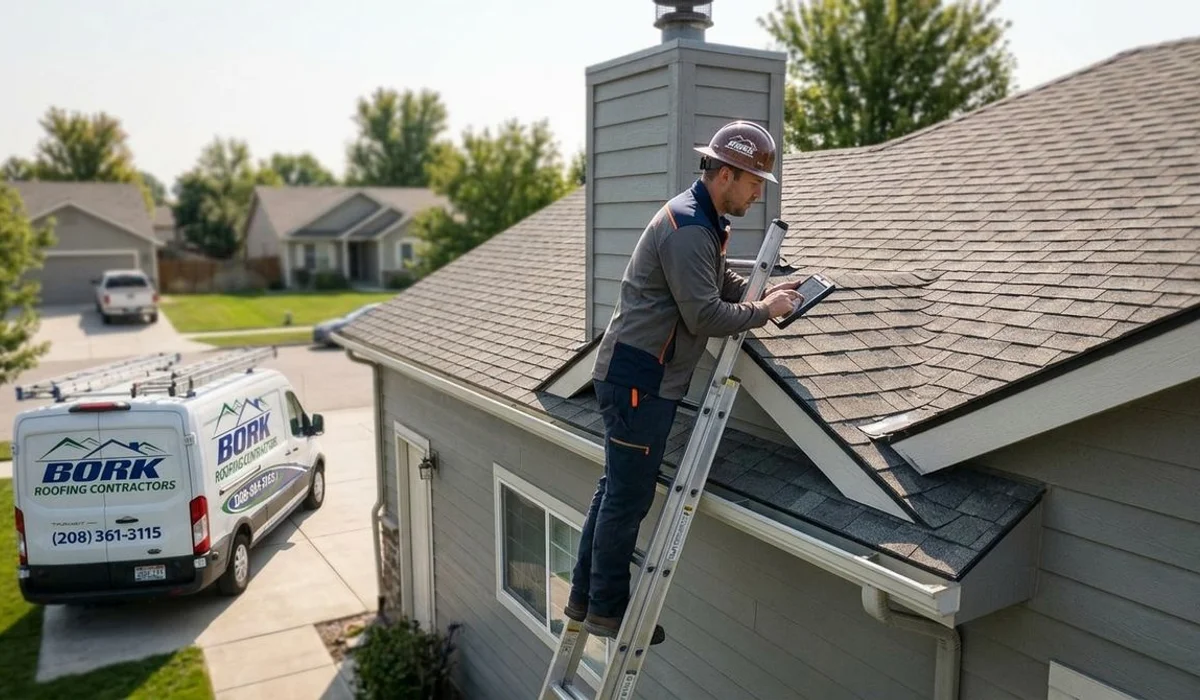
The Attic Points (14-18)
We focus on the interior structure because standard walk-arounds ignore the attic space. Skipping this crucial interior step leaves half the story completely untold. Finding the connection between exterior wear and interior damage requires careful observation.
| Exterior Symptom | Interior Consequence |
|---|---|
| Curling shingles | Moisture reaching the roof deck |
| Clogged soffit vents | High attic temperatures |
| Damaged chimney flashing | Water stains on ceilings |
Decking and Structural Health (Point 14)
Our team actively searches for moisture staining on the underside of the roof deck. Condensation buildup is a major overlooked issue for local properties during freezing weather. Structural weakness like rot or delamination requires immediate professional attention.
We know from experience that dry rot repair adds $500 to $1,000 to a typical project. Replacing compromised wood prevents dangerous collapses under heavy winter snow loads. Catching these problems early keeps thousands of dollars safely in your bank account.
Ventilation and Insulation Balance (Points 15-16)
Our inspectors evaluate the balance between ridge exhaust venting and soffit intake. Proper airflow is absolutely critical to extending shingle life during scorching summers. The International Residential Code mandates one square foot of net free ventilating area for every 150 square feet of attic space.
We verify that insulation sits at an adequate depth without compressing against the deck. Installers must never block soffit vents with thick fiberglass batts or blown-in material. This simple mistake traps heat and rapidly destroys the protective layers above.
Ice Dams and Pest Evidence (Points 17-18)
Our team checks for water staining along the eave line to identify prior ice dam intrusions. Ice dams form when escaping heat melts snow that subsequently refreezes at the colder eaves. The Federal Emergency Management Agency identifies winter storms as a primary driver of home water damage claims.
We also look for rodent or bird evidence hidden high up in the rafters. Pests leave behind signs that highlight open entry points needing tight seals. Closing these gaps prevents future infestations and stops expensive energy loss.
The Documentation Points (19-21)
Our process relies on transparent data because clear reporting provides the foundation for smart decisions. You need concrete evidence rather than vague verbal promises from a salesperson. High-quality visuals completely eliminate the guesswork from the maintenance process.
Drone Photography and Diagnostics (Point 19)
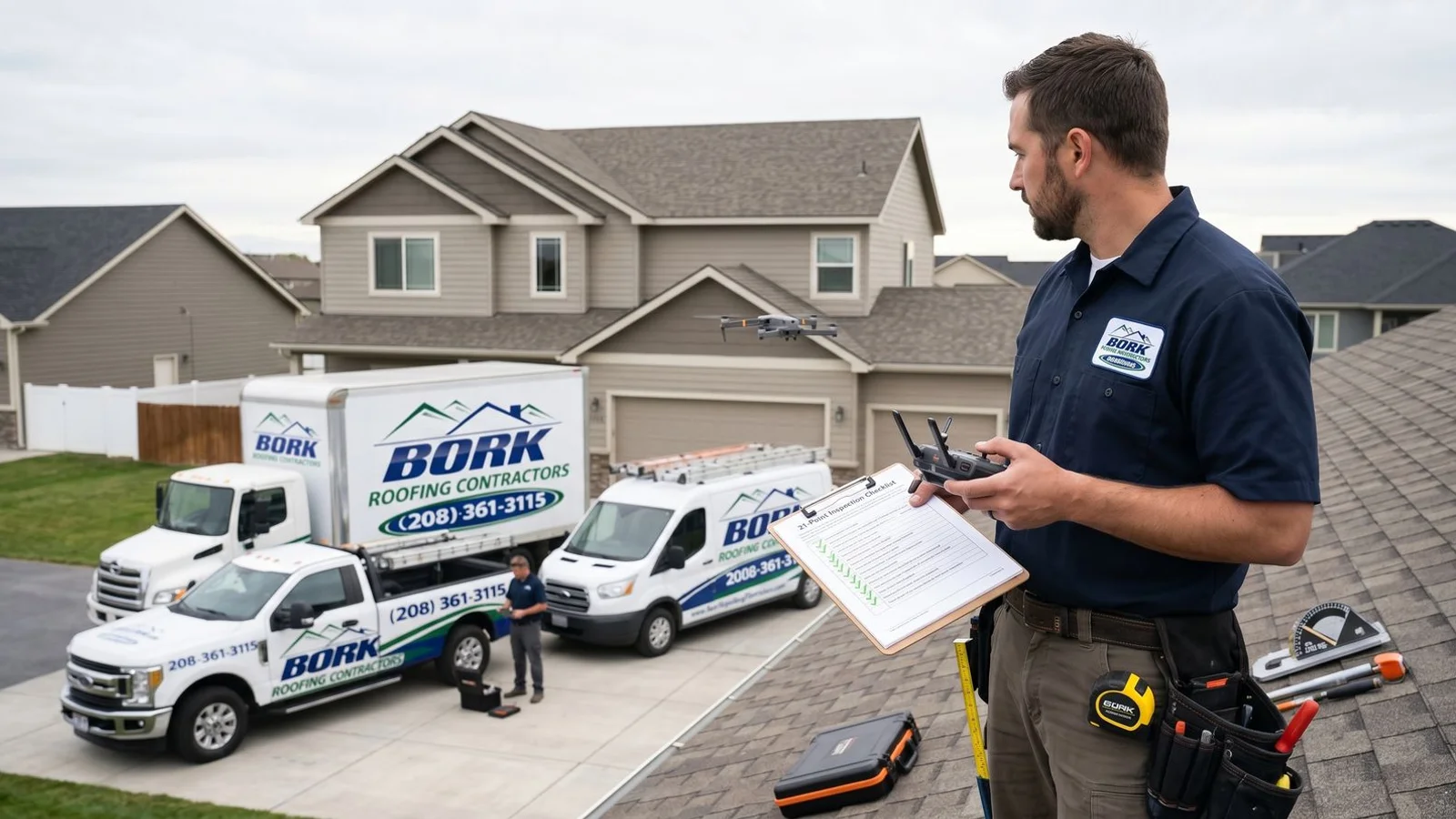
We utilize advanced drone technology to capture high-resolution imagery from multiple angles. Industry-leading software like EagleView Assess provides measurement accuracy down to a quarter of an inch in 2026. These detailed aerial views reveal hidden issues that standard ladders simply cannot reach.
Our drones safely document close-ups of specific defects across the entire surface. Artificial intelligence tools now help spot minor wind and hail impacts that human eyes often miss. Better data leads directly to significantly better repair strategies for your building.
Findings Report and Cost Estimates (Points 20-21)
We summarize all findings in a written report with clear, actionable recommendations. You will know exactly which areas require repair, replacement, or simply ongoing monitoring. A typical 2,200 square foot roof replacement in Idaho currently ranges between $15,480 and $17,820.
Our line-item estimates remove the pressure of high-stress sales tactics. Providing exact measurements minimizes material waste and keeps your final bill totally predictable. Transparency builds lasting relationships with the property owners who trust us.
Why All 21 Points Matter
We know that many competitors offer brief walk-arounds that check only five basic items. This rushed method leaves owners surprised by costly problems just a few months later. Thorough evaluations require 60 to 90 minutes of dedicated time on site.
Our complete picture approach prevents massive financial shocks down the road. Catching a small leak early usually keeps repair costs firmly between $200 and $600. Ignoring the same leak leads directly to structural decay and a mandatory full replacement.
Free for Homeowners
We offer this 21-point inspection completely free for any Meridian area owner considering maintenance. Understanding exactly what protects your property gives you absolute peace of mind. There is zero obligation and absolutely no pressure to sign a contract.
Our friendly staff invites you to schedule your comprehensive evaluation today. Call (208) 361-3115 to book an appointment with a professional right now. Requesting help online takes just two minutes to get your project started.